2010년 7월 6일 화요일

Korea, New Zealand seek to expand ties

South Korea and New Zealand on Monday agreed to further expand their bilateral relationship and step up regional cooperation on security and economic issues. 

During their meeting, President Lee Myung-bak and New Zealand Prime Minister John Key discussed how they would pursue a free trade agreement that would help further enhance bilateral trade.

“They reaffirmed their expectation to conclude the Korea-New Zealand FTA as early as possible. Both recognized the mutual benefits in working closely together toward enhanced trade and economic links and the opportunities existing for new trade in both directions,” the presidential office of Cheong Wa Dae said.

In particular, the leaders sought ways to increase exchange in the areas of information technology and communications, in addition to energy and natural resources. 

New Zealand Prime Minister John Key delivers a speech with business leaders in Seoul on Monday. Yonhap News

N.K. economy to shrink on trade sanction

The North Korean economy is to record further negative growth this year on trade suspension by the South following the North’s sinking of a warship, a report said Tuesday. 

A report by the state-run Korea Development Institute said although the suspension of inter-Korean trade is expected to cost North Korea about $280 million annually, its economy won’t shrink to the crisis level had in the 1990s. 

“Our outlook is based on a forecast that its external trade will likely post a setback,” it said without estimating a figure. 

North Korea’s economy contracted 0.9 percent last year on poor harvests and strengthened international sanctions targeting its nuclear program. 

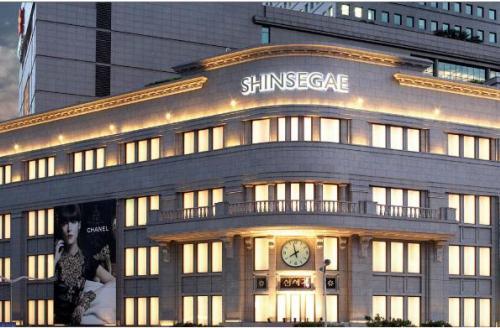
Shinsegae vice chairman’s tweet twits Samsung Electronics

Shinsegae Group’s vice chairman is once again in the news for posting comments about domestic brand smartphones on his Twitter account. 

Chung Yong-jin, Samsung Electronics’ chairman Lee Kun-hee’s nephew, posted comments on Twitter describing difficulties in receiving a signal on his Galaxy S, Samsung Electronic's latestest smartphone in the United States. 
In an April Tweet, criticized local electronics makers for being interested in only the number of devices they sell, rather than in developing a solution to compete with the iPhone.

Chung’s new smartphone-related Twitter entry, entered on Monday, read that his Galaxy S had failed to receive a roaming signal for six hours. Chung’s entry prompted a series of responses from his more than 24,000 followers suggesting possible solutions to his problem.

Police get tough on child sex crimes

The police have declared all-out war on sex criminals who victimize children.

In a meeting of high-ranking police officials on Monday, National Police Agency Commissioner General Kang Hee-rak vowed to take advantag all possible measures to eradicate sex offenses against children.

The meeting lasted for an unprecedented six hours, reflecting the sense of urgency within the police organization.

“The prevention of sexual child abuse should be the top priority for all police officials,” said Kang.

Among the reinforced preventive measures is a sex crime mapping system, showing the date and place of all sex offenses since 2004, together with the personal information of the offenders, said officials.

2010년 7월 5일 월요일

[G20 summit agenda] Rebalancing global growth

The following is the seventh in a series of articles analyzing the major problems that the G20 leaders should tackle to stabilize the global financial markets and rebalance the world economy. Ed.

By Tu Packard

For the first time in modern history, the emerging market countries especially China, India and Brazil-supplanted the United States in leading the world economy out of the deepest recession since 1929. Also for the first time, the governments of these rapidly growing economies took seats at the Group of 20 global policymaking table, marking a major transition in the global economic order. This long-anticipated development was accelerated by the 2007-2008 financial crisis that originated in the U.S. subprime mortgage market and in the excessive risk-taking by financial firms whose demise would have brought down the international financial system. 
The global spread and depth of the financial shock plunged the world economy into its first highly synchronized recession since the Great Depression. The shock froze global private sector credit and chilled private sector demand, especially in the developed economies. Trade plummeted and unemployment rose rapidly. The United States and United Kingdom two countries at the epicenter of the financial storm were hit hard, but export-dependent Germany and Japan suffered even more from spillover effects. 
Only decisive and concerted action by leaders of the world’s largest economies this degree of global policy coordination also was without precedent saved the world economy from sliding into an even deeper and more protracted recession. Governments and central banks around the world spent over $11 trillion to support the financial system and about $6 trillion in fiscal stimulus measures to shore up the global economy. Without these extraordinary policy measures, private demand would have collapsed. The resulting social and economic costs would have been even greater (see Charts 1 and 2). 
Emerging market countries 

[G20 summit agenda] Bank compensation reform to help global stability

The following is the 10th in a series of articles analyzing the major problems that the G20 leaders should tackle to stabilize the global financial markets and rebalance the world economy.


Prior to the global financial crisis, the short-term compensation practice by major financial institutions resulted in excessive risk-taking behavior and contributed to the crisis. Some financial institutions were criticized for paying out bonuses while they were accepti

[G20 summit agenda ] The stakes for Asia in global financial stability


The following is the 11th in a series of articles analyzing the major problems that the G20 leaders should tackle to stabilize the global financial markets and rebalance the world economy. 

Two years after the onset of the global financial crisis and the ensuing global downturn, the recovery that is now taking hold is marked by a divergence in the performance across advanced and developing economies, and also across regions. As the IMF’s latest World Economic Outlook notes, while advanced economies as a group are expected to grow by 2.3 percent this year, emerging and developing economies should see output expand by 6.3 percent. 

Asia is now at the forefront of the recovery, with the developing economies of the region expected to expand by 8.7 percent. Indeed, and for the first time, Asia’s contribution to a global recovery has outstripped that of other regions. Moreover, the region’s recovery has been underpinned by strong domestic demand and not just a rebound in exports. The strong relative growth prospects for Asia have also attracted large capital inflows to the region, buoyed by the expectation of higher earnings growth than in advanced economies and the prospect of currency appreciation.